
For growth in export, continuous gain in productivity is essential.
Aam Aadmi Party chief spokesperson Yogendra Yadav tells Somesh Jha how Delhi has moved beyond Shahi Imam-type politics. Yadav also takes a dig at Finance Minister Arun Jaitley, and says the AAP had formulated its policies on the streets, unlike the Bharatiya Janata Party.

Oil Minister M Veerappa Moily has suggested pricking the ballooning oil bill with everything from a street theatre campaign encouraging lower fuel use, to shutting fuel stations, to increasing imports from Iran.

Santosh Kamath, partner (infrastructure and government services), KPMG in India, expects an extension of a tax holiday for the sector.
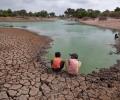
Renewable energy is mistakenly restricted to electricity.
The PM also made a veiled attack on the Congress referring to corruption in purchase of helicopter, aircraft, guns and cooking gas subsidy.
In less than two months since the announcement in March, the state has mobilised an armada of small and medium enterprises keen on making components for large equipment manufacturers.

Growth in the third quarter (October-December) is expected to be the weakest in years, with spending hit due to unavailability of enough replacement currency.

RIL's standalone net profit rose one per cent quarter-on-quarter

It's time the government accepts that Digital India is too distant.

High fiscal deficits raise inflation which hits the lowest income and salaried classes.

'Instead of doing reforms and restructuring, the present government is busy with the perception that everything is fine and the economy is hunky-dory.' 'Such hollow perceptions are very dangerous for the Indian economy in the long run.' 'The real risk to India is the lack of decent employment opportunities for youth in general and educated youth in particular.'

Sunil Sethi raises five questions to avoid the pitfalls that ended his ignominious earlier tenure as chief minister exactly a year ago

'In contrast to the generally buoyant tone of the Economic Survey in January, he sounds uncharacteristically pessimistic, saying that forces in the world economy -- slowing global trade, protectionism, robots -- will limit India's manufacturing to levels well below what propelled East Asia's economies decades ago.'

'India, by virtue of its gigantic population and geography, stands at the very front line of this climate catastrophe.' 'But this is a threat that our easily distracted national mind is ill-equipped to think about, let alone plan for,' says Rahul Jacob.
.jpg)
Conservation of energy dominated Ghosh's thoughts ever since he completed his Masters in Energy Science and Technology from Jadavpur University early 2000.
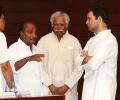
'Antony and I have been friends for over half a century, and I know the man does not tell lies. The problem is that what he believes to be the truth might not actually be true. He may believe that India needs the Congress, and that the Congress in turn needs the Nehru-Gandhi family, but that does not mean that India shares those articles of faith,' says T V R Shenoy.

'Imran Khan hopes to fulfill the dreams of the founders of of Pakistan in establishing an Islamic Welfare State.' 'The grave situation of the economy makes realisation of this dream very difficult,' points out Colonel R N Ghosh Dastidar (retd).

From Kudankulam to the Land Bill, the author takes the Twitter route to capture the infra action of 2013.

Investor confidence has evaporated amid fears over the rising cost of funding India's gaping current account deficit, prompting New Delhi to delay plans to raise much-needed funds through partial privatisations, finance ministry sources said.
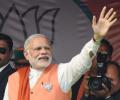
The prime minister also said if there is a 'kabaristaan' (graveyard), there should be a 'shamshaan' (cremation ground) too.

For stressed loans, the need is to prevent disruption in cash flows from a systemic perspective, conserving employment and assets in untainted enterprises with the potential for recovery, says Shyam Ponappa.
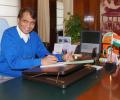
Railway Minister Suresh Prabhu faces a stiff dilemma on whether to raise fares and freight rates in his second Rail Budget.

Tax incentives to have cascading effect on the capital goods industry.
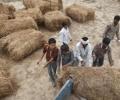
The agrarian crisis must be met with similarly speedy responses.
.jpg)
The toxic brew of fiscal populism, crony capitalism and bad economic management has ensured the collapse of economic growth, industrial stagnation, stubbornly high consumer inflation, declining savings and investment, shrinking employment opportunities, and a dangerously vulnerable external financing situation.
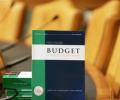
Arun Jaitley will aim for jumps in other revenue streams for the government.
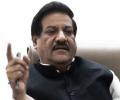
The Prithviraj Chavan government wants to retain its strongholds and ensure there is negligible anti-incumbency. That many of its decisions can run into legal problems is not an immediate worry, says Neeta Kolhatkar.

Suresh Prabhu, the new railway minister, described his charge as being 'the engine of growth'.
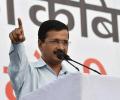
Kejriwal has shown once again that a political party once mandated to ensure governance cannot act the same way it did before assuming power.

Aiming to enhance quality of life while conserving the planet, Fourth Partner has ventured into the disruptive sector of solar power

Fadnavis, currently on a visit to the US, invited American investments in the infrastructure, agro-processing and manufacturing sectors of his state.

The AAP has adopted policies in an ad hoc manner, without thinking them through or deriving them from a broader framework. This must change if the AAP is to become a credible alternative, says Praful Bidwai.

Some have welcomed this shift in the government's stance.
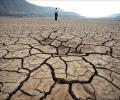
'The government had six months to prepare for the contingency. When the government is forewarned, it needs to take a decision on contingency measures, evict villagers, provide them with alternate temporary shelter, accommodation, provide food, water, cattle stocks. But none of this is ever done,' says N Suresh.

Three way split of AIADMK has slowed decision-making, prompting industry to look outside the state, says T E Narasimhan.

The BJP's embarrassing rout in Delhi may affect Modi in many ways.

'The army has stopped short of exerting the sort of influence it may have done historically.' 'It is comfortable with its relations with the civilian government as the superior partner.'

Infrastructure investments in politically-expedient sectors such as water supply, sanitation and irrigation have seen an increase during the first year of the 12th Five-Year Plan (2012-13 to 2016-17), but the same did not get replicated in other critical sectors.

'The Indian economy has been subsidised by the poor.'
